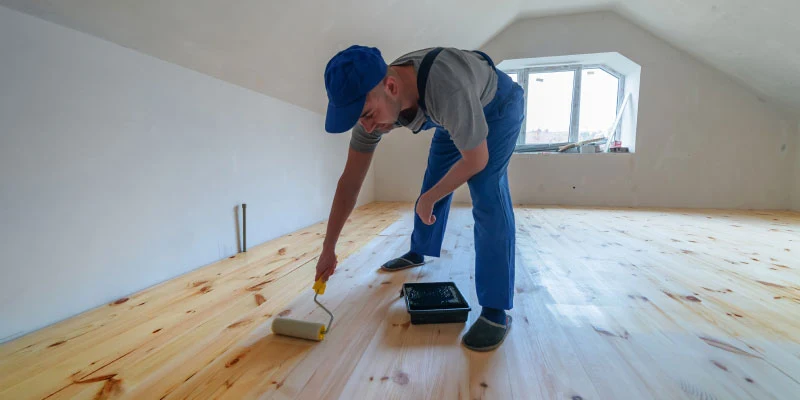
Sanding a timber floor brings the surface back to life, but it also leaves the wood exposed. Once old coatings, marks and surface wear have been removed, the finish applied afterwards plays a big part in how the floor looks and how well it deals with everyday use.
For a newly sanded floor, that means thinking beyond colour and sheen. The finish also needs to suit the timber, the condition of the floor and the amount of traffic the room is likely to receive. Products such as Berger Seidle ceramic star are designed for situations where a durable waterborne finish is needed, including renovation projects where the existing floor has already been through years of use.
Start with the condition of the timber
A newly installed timber floor and a floor that has been sanded after 20 years of use aren’t necessarily starting from the same point.
Older boards may have remnants of previous coatings or other substances within the timber even after sanding. There may also be differences between boards caused by repairs, replacement sections or natural ageing. This is one reason the preparation and finishing system should be considered as a whole rather than simply choosing a topcoat based on appearance.
Berger-Seidle AquaSeal CeramicStar is particularly suited to renovation work because it is designed to help block substances that may remain in older floors. As with any existing timber floor, a test area is sensible where there is uncertainty about the previous treatment or condition of the boards.
Think about how the room is actually used
A bedroom floor and the floor running through a busy entrance, kitchen or commercial space face very different levels of wear.
Foot traffic gradually affects any timber finish, particularly in pathways that are used repeatedly. Dirt and grit brought in from outside can also act as an abrasive under shoes. For these areas, resistance to wear matters just as much as the initial appearance of the coating.
CeramicStar is a two-component polyurethane finish with ceramic components incorporated into the coating. It has been developed to provide strong abrasion resistance, making it an option for timber floors where durability is a priority.
That doesn’t remove the need for normal floor care. Mats at entrances, suitable cleaning products and dealing with grit before it is walked across the room will all help the finished surface last longer.
Don’t overlook drying and return-to-use times
Renovating a timber floor usually means taking a room out of use while sanding and coating takes place. In a family home that might mean rearranging furniture and access for a few days. In a shop, office or other commercial property, downtime may be an even bigger consideration.
CeramicStar has a relatively fast return-to-use time, with Berger-Seidle stating that a completed floor can be put back into use after 12 hours under the specified conditions. Drying will still depend on factors such as temperature, humidity, ventilation and the amount of finish applied.
There are also restrictions after the floor has been coated. Rugs shouldn’t immediately go back down, for example, so the full curing instructions still need to be followed even if the floor is ready for careful use.
Choose the finish as part of the complete flooring system
A good result doesn’t come from the final coat alone. Sanding quality, surface preparation, primers and the way each coat is applied all affect the finished floor.
Different timber species can also behave differently during coating. Highly absorbent timbers need to be treated appropriately, while older or unusual floors may require a compatible primer before the finish is applied.
For that reason, it makes sense to select a finishing system based on the actual floor rather than simply buying whichever coating promises the toughest surface. The aim is a finish that suits the timber underneath, provides the level of protection the room needs and leaves the natural floor looking the way you want it to.