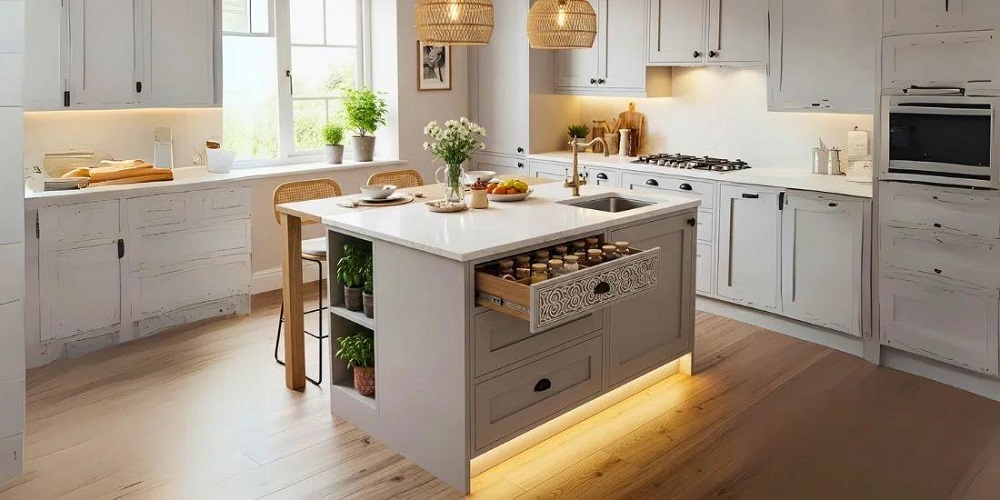
A kitchen island is no longer limited to large luxury homes. In medium sized homes, it can transform the kitchen into a more efficient, social, and visually balanced space. When designed thoughtfully, a kitchen island improves workflow, increases storage, and enhances everyday usability without making the space feel crowded.
Below are the key advantages that make kitchen islands a practical upgrade for medium sized homes.
Improves Kitchen Functionality
One of the biggest benefits of installing a kitchen island is the improvement in overall kitchen efficiency. A well positioned island acts as a central workstation that supports multiple activities simultaneously.
It allows homeowners to:
- Prepare meals more comfortably
- Organize cooking tools within easy reach
- Separate cooking and cleaning zones
- Support multiple users working together
This makes daily kitchen routines smoother and more organized.
Adds Extra Storage Space
Medium sized kitchens often face storage limitations. A kitchen island solves this problem by introducing additional cabinetry without requiring structural expansion.
Storage options can include:
- Deep drawers for cookware
- Shelves for appliances
- Cabinets for pantry items
- Built in organizers for utensils
This extra storage reduces clutter and keeps countertops clear.
Creates Additional Countertop Workspace
Limited counter space is a common challenge in medium sized homes. A kitchen island instantly increases the available surface area for food preparation and kitchen activities.
This additional workspace supports:
- Chopping and mixing ingredients
- Placing small appliances
- Serving meals
- Temporary storage during cooking
With more working space, the kitchen becomes more comfortable and efficient to use.
Enhances Seating Options
Kitchen islands can double as informal dining areas. Adding seating transforms the island into a multipurpose zone suitable for quick meals and conversations.
Seating benefits include:
- Casual family breakfasts
- Space for children to complete homework
- Guest interaction during cooking
- Additional dining space when needed
This reduces dependence on separate dining areas in medium sized homes.
Improves Kitchen Layout and Movement Flow
A properly designed kitchen island helps define movement paths and separates work zones efficiently. It supports the natural cooking workflow between sink, stove, and refrigerator.
Benefits to layout include:
- Better space organization
- Easier navigation inside the kitchen
- Reduced congestion during busy hours
- Improved accessibility to essential areas
This makes the kitchen feel larger and more structured.
Increases Property Value
Kitchen upgrades are among the most attractive features for homebuyers. Installing a kitchen island improves both functionality and visual appeal, which positively influences resale value.
Potential buyers often look for:
- Extra storage solutions
- Open kitchen layouts
- Flexible workspace
- Modern kitchen features
A kitchen island checks all these expectations.
Creates a Social Interaction Zone
Modern kitchens are not just cooking spaces. They are social hubs within the home. A kitchen island encourages interaction between family members and guests while meals are being prepared.
It allows:
- Conversations during cooking
- Shared meal preparation
- Comfortable hosting experiences
- Better connection with family members
This makes the kitchen more inviting and lively.
Supports Multipurpose Usage
In medium sized homes, maximizing space utility is essential. A kitchen island serves multiple roles beyond cooking.
It can function as:
- A breakfast counter
- A mini workspace
- A serving station
- A storage unit
- A homework corner for children
This versatility makes it one of the most practical additions to a medium sized kitchen.
Enhances Visual Appeal of the Kitchen
A thoughtfully designed kitchen island acts as a focal point that improves the overall aesthetics of the space. It creates balance and structure in the layout while adding a modern touch.
Design upgrades may include:
- Stylish countertops
- Pendant lighting above the island
- Contrasting cabinet finishes
- Decorative storage panels
These elements enhance the overall look without overwhelming the space.
Helps Define Open Kitchen Layouts
Medium sized homes often feature open kitchen concepts connected to living or dining areas. A kitchen island naturally defines the kitchen boundary without blocking openness.
This results in:
- Clear space separation
- Improved visual organization
- Better interior flow
- A more spacious appearance
It helps maintain openness while preserving functionality.
Frequently Asked Questions
What is the ideal size of a kitchen island for medium sized homes
A kitchen island should allow at least 90 centimeters of clearance around all sides. Typically, a compact island between 120 to 180 centimeters in length works well for medium sized kitchens.
Can a kitchen island include appliances
Yes. Many homeowners integrate cooktops, sinks, or dishwashers into kitchen islands depending on available plumbing and electrical layout.
Is a movable kitchen island suitable for medium sized homes
Movable kitchen islands are excellent alternatives when permanent installation is not possible. They provide flexibility and can be repositioned as needed.
How many people can sit around a kitchen island comfortably
Most medium sized kitchen islands can accommodate two to four people depending on island length and seating arrangement.
Does installing a kitchen island require structural changes
In most cases, structural changes are not required unless plumbing or electrical systems are added to the island.
Which countertop materials are best for kitchen islands
Popular choices include granite, quartz, marble, and solid surface materials due to their durability and ease of maintenance.
Can a kitchen island make a small kitchen feel crowded
If designed properly with appropriate proportions and spacing, a kitchen island improves functionality without making the kitchen feel congested.